

Synonyms: “Pill” (to prevent pregnancy), oral contraceptive, hormonal contraceptive, oral ovulation inhibitor, contraceptive pill, mini-pill (progestogen only), oral hormonal contraceptive, combined pill (oestrogen + progestogen), birth control pill
The pill: Oral contraceptive

One month pack. Stock photo: reproductive health supplies coalition auf unsplash
Ingredients and form
The “pill” is a contraceptive in the form of a small tablet, which is taken regularly to prevent pregnancy. It contains either a combination of the female sex hormones oestrogen and progestogen or just progestogen (mini-pill). Depending on the composition, it prevents pregnancy in different ways e.g. by suppressing ovulation or preventing a fertilised egg from implanting in the uterus.
What should you do in an emergency?
If swallowed by children, irrespective of gender:
- Do not induce vomiting.
- Rinse out the mouth and remove any residue.
- Contact Tox Info Suisse if they have consumed more than one month’s pack.
For foreign products that contain added iron, please contact Tox Info Suisse to ensure that there are no specific risks caused by the iron.
Symptoms
In children:
Usually, there are no symptoms for most children after consuming a monthly pack. Occasionally they may experience nausea, loss of appetite and vomiting.
In women of reproductive age:
They may also experience irregular cycles and interim bleeding.
Further information
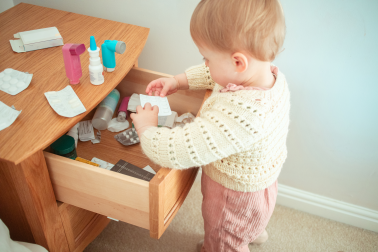
Bedside cabinets are not a safe place to store medicines. Foto: Raylipscombe auf iStock
Note on hazards and prevention:
Medications such as the pill are often stored in easily accessible places which increases the risk of small children consuming them by mistake. For this reason all medications – even those that appear harmless at first glance – should always be stored out of the reach of children.
Tip: Store medications in a lockable cabinet or in a child-proof box.
Updated in April 2026, first published in March 2025