Silicagel

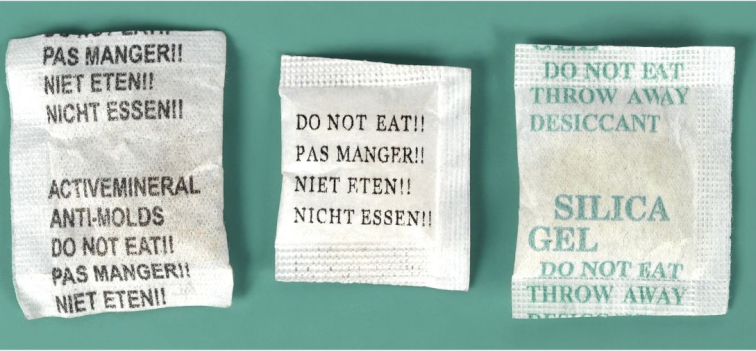
Desiccant packs, often with the instruction: Do not eat, throw away

differents packs with silicagel
Photo: ajt, Canva, edit: cnu

Synonyms: silica gel, amorphous silica, colloidal silicon dioxide

Occurence:

  1. In small paper or fleece bags in the packaging of electronics, leather goods, shoes or handbags
  2. Packs are often labelled with the statement «Do not eat, throw away»
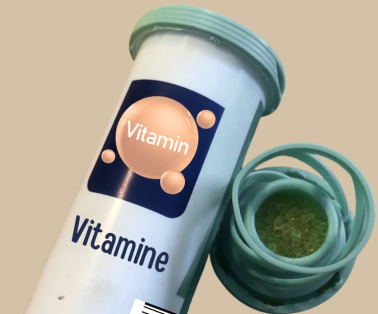
  3. In medication lids (e.g. effervescent tablets)
  4. In food packaging of dry products (e.g. seaweed sheets, pasta, snacks)

Function: Absorb moisture and protect the contents from damage.
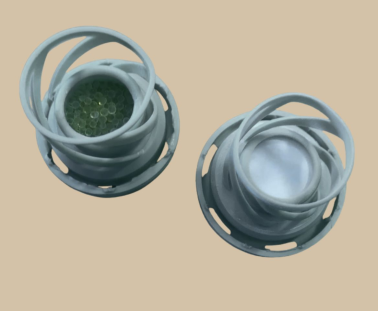
silicagel in effervesent tablet lid
Silicagel in effervescent tablet lid Photo: cnu
silicagel in effervesent tablet lid
Silicagel in effervescent tablet lid Photo: cnu

Pack content

Typically: 0,5–5 g content per pack

Silica gel beads: Small, white or transparent beads, odourless, usually uncoloured.

Coloured versions: The colour is used as a moisture indicator (e.g. blue/dry, pink/damp) and a change in colour indicates whether the silica gel has absorbed moisture. 

Is there a danger of poisoning?

None. Silica gel is inert, does not dissolve in the digestive tract, and is excreted in its original form.

Even the low quantities of dye in the coloured silica gel are safe if swallowed accidentally. 


What should you do after swallowing?

  • Do not induce vomiting
  • Rinse mouth
  • Drink 100–200 ml of clear, fat-free fluid (e.g. water, cordial, tea)
  • Medical attention only for persistent coughing (extremely rare when beads have been inhaled)

Symptoms

Occur very rarely as usually only small quantities (pack content) are swallowed. Occasionally mild gastrointestinal symptoms. Rare: Coughing if beads have been inhaled (aspiration). 

Prevention

  1. Do not open the little bags, ideally dispose of them immediately
  2. Keep out of the reach of children and pets

Note about oxygen absorbers

These packs also bear the statement «Do not eat, throw away». They contain other substances (e.g. iron powder or activated charcoal), usually a dark powder. Accidental swallowing of small quantities seldom causes symptoms.

Further information


February 2026