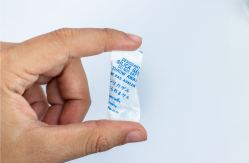


The little, usually white, packets labelled with «Do not eat, throw away» are included with numerous products – from food to electronics, textiles and leather goods. These bags can be found with almost all packaging, especially in deliveries that comes from Asia.
The uncertainty is understandable: What’s inside? Why does it say «do not eat»? And what happens if a careless teenager seasons their Asian rice crackers with the powder or a young child swallows a few beads from the pack?
Tox Info Suisse receives regular enquiries about this. The good news first: In the vast majority of cases, these little bags are harmless. The most you can expect from accidental ingestion are mild gastrointestinal symptoms.
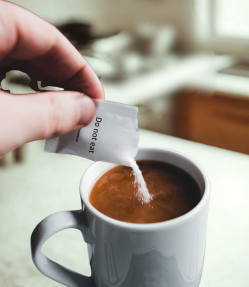
Oops – that wasn’t sugar! AI Image: ChatGPT OpenAI/Tox Info
What exactly these little bags contain is often a mystery to Tox Info Suisse as well. The only instruction is usually «Do not eat, throw away» – and that’s where the information often stops. There are usually no specific details about the ingredients.
However, in our consultations we have found that the circumstances generally give a good indication that there are two common kinds of packs: Desiccants, which bind moisture, or oxygen absorbers, which remove atmospheric oxygen. Both protect sensitive products, prolonging their useful life – even if their contents remain a mystery at first glance.
If you wish to know more, you need to ask the manufacturer. In practice, it is almost never possible to get a prompt response but also not necessary for a risk assessment. The little bags are small (generally 0.5–5 g) and the contents usually do not end up in someone’s mouth.
However, in our consultations we have found that the circumstances generally give a good indication that there are two common kinds of packs: Desiccants, which bind moisture, or oxygen absorbers, which remove atmospheric oxygen. Both protect sensitive products, prolonging their useful life – even if their contents remain a mystery at first glance.
If you wish to know more, you need to ask the manufacturer. In practice, it is almost never possible to get a prompt response but also not necessary for a risk assessment. The little bags are small (generally 0.5–5 g) and the contents usually do not end up in someone’s mouth.
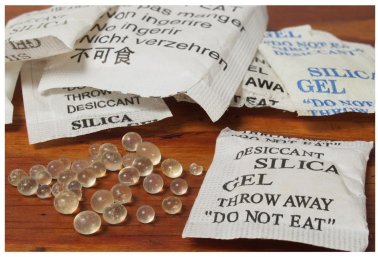
Photo: Phodopus, Canva
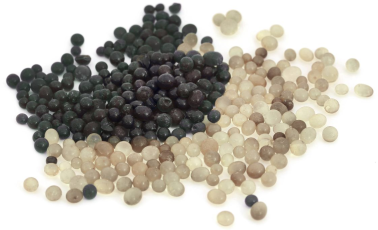
Most of the enquiries we receive are about silica gel. It is widespread and the easiest to identify – either through the labelling or its typically transparent beads. It is a highly porous, glassy material that can absorb a lot of moisture. Silica gel is inert and therefore non-toxic; it is excreted by the body in its original form. You could compare it with sand or soil: harmless but not intended to be eaten. And just like a few grains of soil on your salad, a few beads of silica gel won’t cause any harm.
Silica gel is also available in coloured versions that serve as moisture indicators: They change colour once they’ve absorbed water. The dyes used are not problematic in the small quantities contained in the packs and so there is no significant risk of toxicity.
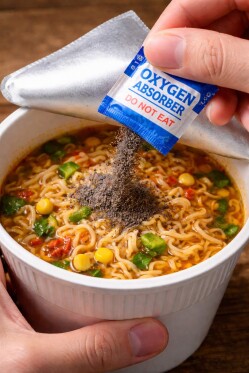
That’s the wrong sachet! AI Image: ChatGPT OpenAI/Tox Info
Besides desiccants, a second group of substances can be found in similar packs: Oxygen absorbers. References such as “oxygen absorber”, “deoxidiser”, “oxygen scavenger”, “O2-zero”, “non-oxygen” or “do not microwave” indicate an oxygen absorber – the last item in the list is because the iron powder it contains can spark inside a microwave. The labelling or summary of contents are often less clear than for the desiccants.
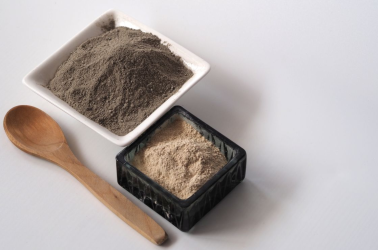
Oxygen absorbers are predominantly used in food in airtight packaging. They remove oxygen from the packaging, making the products longer lasting. They typically contain iron compounds in powdered form, sometimes combined with activated charcoal.
The iron it contains reacts with the oxygen in the packaging to form iron oxide (rust). This lowers the oxygen content so that the food remains fresh for longer, also preventing mould and oxidation processes.
Iron poisoning is extremely unlikely given the small quantities in these bags as the iron(II) carbonate they contain is poorly absorbed by the body.